CRM Hygiene for Sales: Start a 15 Minute Weekly Cadence

Start a short, named-hygiene cadence now and assign owners: that single step stops most CRM decay before it starts. CRM hygiene means keeping your pipeline, contact, and activity data accurate, deduplicated, and current enough to trust. Teams that run a weekly and monthly cleanup routine, with one person accountable for each task, see better forecast accuracy and get reps back to selling instead of untangling records.
TL;DR:
- Regular ownership of weekly, monthly, and quarterly routines with clear accountability improves CRM data accuracy and forecasting.
- Fix structural flaws first, such as mapping pipeline stages to customer journeys and standardizing fields, to prevent recurring data decay.
- Stop relying solely on automation; address underlying incentives and culture that cause reps to inflate pipelines or leave deals open.
- Use automated tools like required fields, duplicate detection, and activity reminders to reduce manual effort and catch errors early.
- For existing decay, prioritize quick cleanup of active deals and critical records, then sustain routine hygiene to prevent future backlog buildup.
Table of Contents
- A checklist to fix and prevent dirty CRM data
- Hygiene cadence: weekly, monthly, and quarterly routines with owners
- Ownership, governance, and incentives that make hygiene stick
- Automation and tooling categories that reduce manual burden
- Metrics and targets to measure hygiene
- Quick fixes and a triage sprint for CRMs already in decay
- Author perspective: applying hygiene to AI-enabled sales workflows
- What most hygiene advice gets wrong
- TrailerCast as an operational alternative
- FAQ
- Sources
A checklist to fix and prevent dirty CRM data
Most CRM decay comes from the same handful of structural gaps. Before you touch a cleanup tool, fix the design flaws that keep creating new mess.
Start with your pipeline stages. If they describe internal tasks (“send proposal”) instead of where the buyer actually is in their decision, reps will misreport progress every time. Map stages to the customer’s journey, not your to-do list, and the data gets more honest on its own.
From there, work through the rest of the structural list:
- Minimize required fields and standardize picklists so reps aren’t guessing at free-text entries that never match later.
- Require extra fields only at the pipeline stage where they actually matter, not on every record from day one.
- Run duplicate detection at the point of entry, and still schedule a manual merge pass, because real-time checks miss near-matches.
- Require a next-action task on every active opportunity and enforce activity logging as a condition of staying in the pipeline.
- Clean first, enrich second: enrichment layered onto bad records just produces well-formatted bad records.
- Archive stale records instead of deleting them, and capture a specific closed-lost reason every time a deal dies.
A study of more than 250,000 CRM activity logs found that unstructured, free-text notes often reduce forecasting accuracy rather than improve it, which is the research case for prioritizing structured fields and next-action tasks over long narrative updates in the activity log research.
Hygiene cadence: weekly, monthly, and quarterly routines with owners
Hygiene fails when it is treated as a one-time project. It sticks when it is a recurring rhythm with a name attached to every task, which is the core recommendation from CRM hygiene routine guidance.
- Weekly (15 minutes): the pipeline owner runs a stale-deal sweep, flags anything with no activity in 14 days, and reviews new records for obvious entry errors.
- Monthly: RevOps runs a duplicate merge pass, checks the contact database for bounced emails, and audits closed-lost reasons for the past month.
- Quarterly: sales leadership reviews field usage (which fields nobody fills in, which ones are overused), audits user permissions and offboarded reps, and runs a full dedupe and enrichment refresh.
Assign owners by name, not by team: “Jordan owns the weekly stale-deal sweep” works, “sales ops owns hygiene” does not. Pair each routine with a simple escalation rule, something like: if the sweep isn’t done by Wednesday, the manager gets an alert; if it’s still open by Friday, RevOps reassigns it and reports the miss at Monday’s pipeline review.
Ownership, governance, and incentives that make hygiene stick
Gartner’s guidance on CRM governance is blunt: CRM underperforms when sales and IT share ambition but not accountability, and clear field and object owners are central to adoption, according to Gartner’s CRM governance research.
A few things make that accountability real instead of decorative:
- Name one person per routine, never a team, because shared ownership means no ownership.
- Build a visible escalation path: missed deadline, manager alert, then an ops review if it repeats.
- Separate pipeline coverage metrics from forecast accuracy scoring, so reps have no reason to inflate the pipeline just to hit a coverage number.
- Give reps a safe, low-friction way to mark a deal as stalled or lost instead of leaving it open to avoid a hard conversation.
- Run a quarterly permissions and admin audit alongside the data audit, since stale user access creates the same kind of decay as stale records.
Automation and tooling categories that reduce manual burden
Automation should remove friction without removing the human judgment calls that protect your data. Entry-time validation and duplicate detection catch most problems before they get saved, which beats a delayed dedupe pass that has to untangle weeks of bad entries.
A few categories worth building into your stack:
- Required-field enforcement and automatic stage-expiration flags that surface stale deals without anyone having to remember to check.
- Reminders tied to the next-action field, so an opportunity can’t sit untouched without someone getting pinged.
- Enrichment tools that run after a hygiene pass, not before it, so you’re not enriching garbage.
- Orchestration or workflow platforms that route validated records into the right automated sequence.
A practical approach to picking enrichment tools and APIs is laid out in this web data enrichment blueprint, useful if you’re deciding what to build versus buy. Pilot any automation on a low-risk segment first, watch for false positives on duplicate matching, and keep a human in the loop before merges that touch revenue-bearing accounts.
Metrics and targets to measure hygiene
You can’t manage what you don’t measure, and hygiene has a small set of numbers worth tracking consistently.
These benchmarks come from the hygiene routines outlined in the CRM hygiene runbooks. Pair them with the pipeline metrics in sales pipeline forecasting guidance to see how hygiene gaps show up downstream in your forecast.

Quick fixes and a triage sprint for CRMs already in decay
When the backlog is already bad, don’t try to clean everything at once.
- Scope the sprint to what matters now: active deals, key accounts, and any list feeding an active campaign.
- Freeze new imports temporarily so you’re not cleaning a moving target.
- Run filters for the worst offenders: no activity in 30+ days, bounced emails, and exact or near-duplicate matches.
- Archive anything outside the active scope instead of deleting it, and apply simple merge rules, matching on email first, then name plus company plus phone, with manual review before merging any account tied to revenue.
- Once the backlog clears, convert the sprint into the weekly and monthly cadence above so you never need another emergency pass.
A detailed playbook for running this kind of sprint, with sample checklists, is available in this practical CRM hygiene playbook.
Author perspective: applying hygiene to AI-enabled sales workflows
Clean data is the prerequisite for any AI tool to give you a recommendation worth trusting, whether that’s a forecast, a next-action suggestion, or a deal-risk flag. I’d rather see a team pilot a hygiene cadence with one sales team, measure the drop in duplicate and stale-deal rates, then roll it out, than buy new tooling on top of a dirty database.
— Daniel
What most hygiene advice gets wrong
Most CRM hygiene advice treats the problem as a tooling gap: buy a dedupe app, add a validation rule, problem solved. That’s backwards. Survey data on CRM data accuracy and email list decay shows the damage comes from culture and incentives as much as from missing software, according to research on CRM data costs. When reps are scored on pipeline coverage, they inflate it. When there’s no safe way to mark a deal lost, they leave it open and call it “still working it.”
The conventional fix, more automation, treats the symptom. The actual fix is removing the reason reps lie to the CRM in the first place. If your incentive structure rewards a big pipeline number over an honest one, no validation rule will save your forecast. Prioritize fixing what you measure and reward before you prioritize what you automate. A clean CRM is a byproduct of good incentives, not a separate initiative layered on top of bad ones.

TrailerCast as an operational alternative
Everything above assumes someone is manually logging activity, remembering to update stages, and chasing stale deals. We built our platform so that work happens without a rep having to remember it. Every call gets recorded, transcribed, and summarized automatically, so the deal record updates itself instead of depending on someone’s memory of a conversation from two weeks ago.
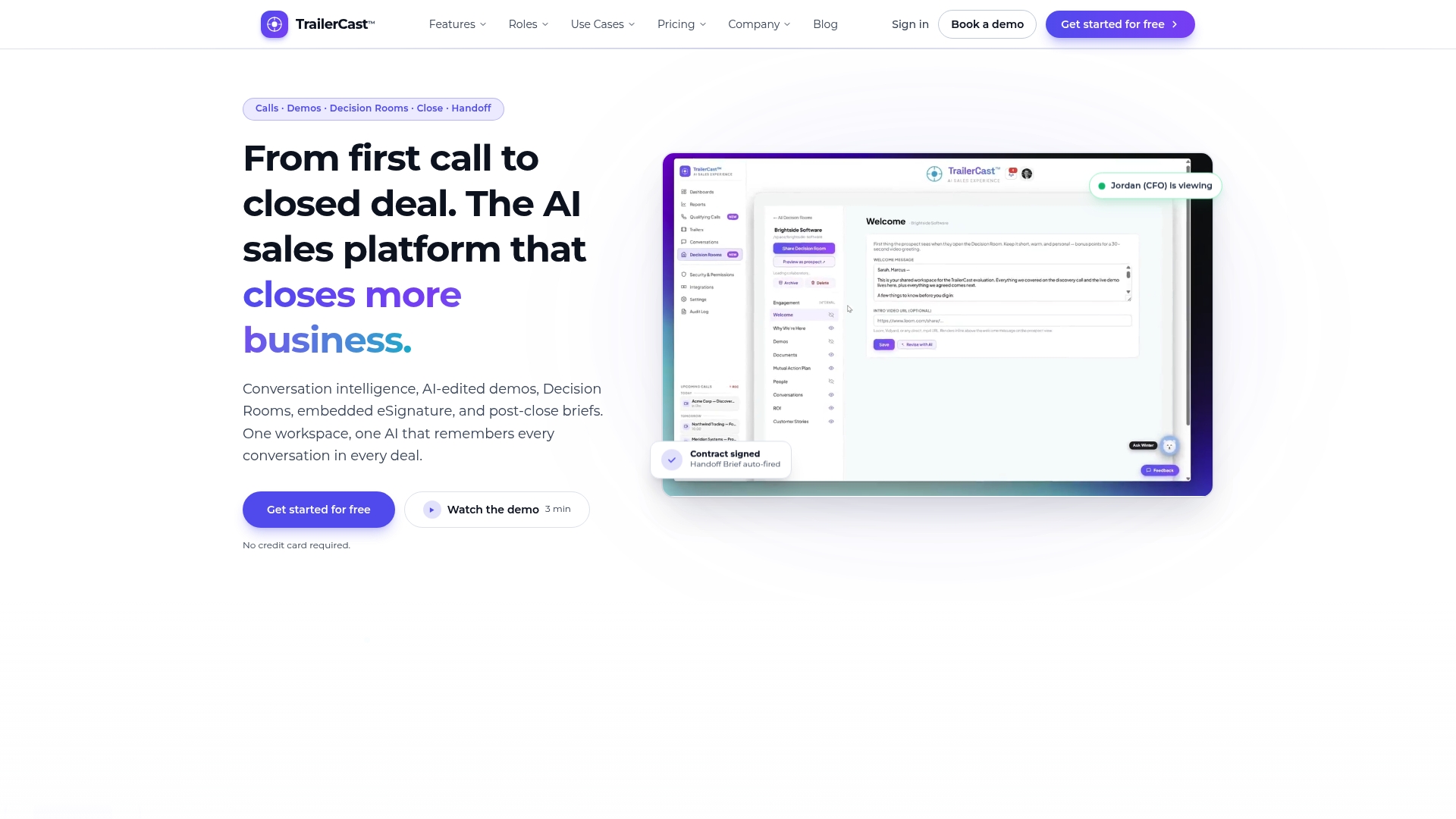
- A single AI layer follows each opportunity across every call and demo, which cuts down on orphaned records and forgotten next steps.
- Engagement data and action items surface automatically for the named owner of each deal, so stale-deal sweeps take minutes instead of guesswork.
- When a deal closes, an automated handoff brief sends the full history to customer success, so archived records stay useful instead of going cold.
If you’re tired of chasing hygiene manually, our AI sales platform starts at $59 per seat per month billed annually, with a free trial and no credit card required.
FAQ
What are the 7 C’s of CRM?
Definitions vary across sources, and no single standardized list dominates the industry. Most versions focus on customer-centric principles like communication, consistency, and convenience rather than a fixed, universally agreed set.
What does CRM do for sales?
A CRM centralizes contact records, deal stages, and activity history so sales teams can track pipeline progress and forecast revenue in one place. When the data inside it is accurate, it also supports reporting, handoffs to other teams, and increasingly, AI-driven recommendations.
Which CRM is best for sales?
The right CRM depends on team size, deal complexity, and existing tech stack rather than a single universal answer. What matters more than the choice of platform is whether the team maintains a consistent hygiene cadence once it’s in place.
Is CRM hard to learn?
Basic CRM navigation is generally straightforward for most sales reps within a short onboarding period. The harder part isn’t learning the interface, it’s maintaining consistent data entry habits over time, which is why ongoing hygiene routines matter more than initial training.
Sources
- CRM Hygiene: Weekly, Monthly, and Quarterly Routines That Keep Data Clean
- Bad CRM Data: What It Costs Your Forecast | AeolusGTM
- Activity logs and forecasting accuracy (SSRN paper)
- Top CIO Practices to Succeed at Sales CRM Governance and Adoption